
Respire C'alma
E-commerce de velas terapêuticas, aromaterapia e produtos fitoenergéticos 100% ecológicos.
Loading
About
Senior Front-End Developer
EducationSystems Analyst
Video coming soon
5 min read
I'm Alisson Brandão Henriques — a software developer, solutions architect, and technology professional with over 20 years of experience building applications for the web.
I started programming as a teenager, customizing blogs, and my professional path has followed much of the software ecosystem's evolution since then: from building traditional interfaces and applications to developing modern, distributed, highly modular systems.
Over the years, I've worked across different languages, frameworks, paradigms, and business contexts. That experience taught me that technology changes fast, but a few principles stay fundamental: clarity, simplicity, organization, consistency, and the capacity to evolve.
Today my focus is mainly on front-end engineering and web application architecture, with strong hands-on experience in React, TypeScript, and modern development ecosystems.
More than implementing interfaces, I like to think about how systems are structured.
How should an application be divided? How can its modules evolve independently? How do you share code without creating unnecessary coupling? How do you establish standards that let different people work on the same codebase without turning the project into a pile of exceptions?
These are some of the questions that guide my work.
I have a particular interest in modular architectures, micro-frontends, design systems, shared libraries, SDKs, automation, and development infrastructure. I like building foundations that don't just solve today's problem, but also create the conditions for the product and the team to keep evolving tomorrow.
Good architecture shouldn't be measured by how many technologies are involved or how intricate the design is. It should be able to organize business complexity without needlessly passing that complexity on to whoever has to maintain the system.
E-commerce de velas terapêuticas, aromaterapia e produtos fitoenergéticos 100% ecológicos.
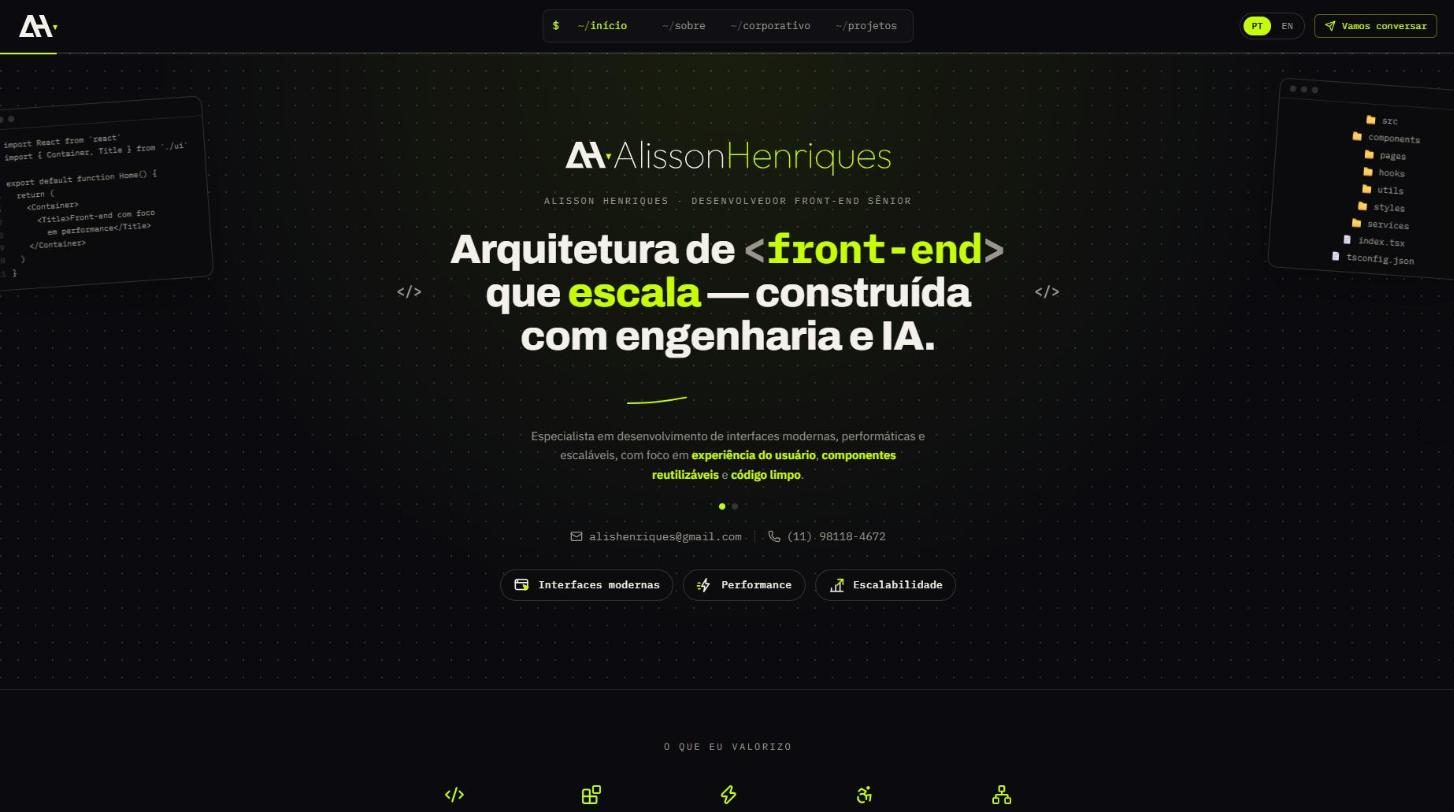
Meu portfólio de carreira construído como produto: Next.js, API GraphQL própria e design system publicado no npm.
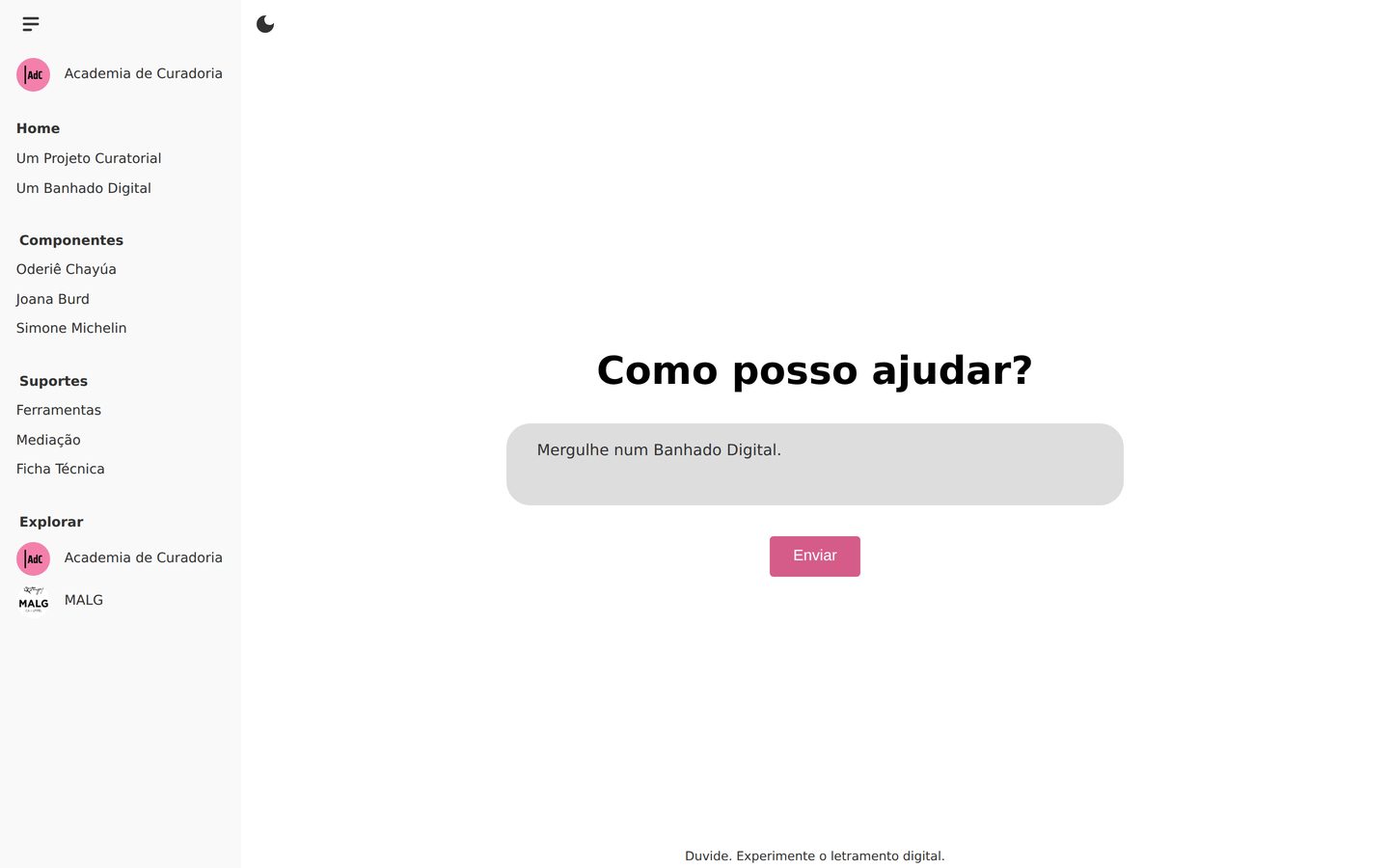
Exposição de arte digital em formato de chat com IA, para a Academia de Curadoria e o MALG (UFPel).
That's why I place a lot of value on readable code, well-defined responsibilities, clear contracts, typing, automated tests, documentation, and processes that cut down repetitive work. I also believe architectural decisions should always stay connected to the product's and the business's real needs.
I particularly enjoy turning one-off solutions into reusable structures.
A recurring need can become a library. An integration can become an SDK. An implementation pattern can become a boilerplate. A repetitive task can become an automation.
This kind of thinking interests me because it lets a solution stop benefiting just one application and start benefiting an entire ecosystem.
I also care a lot about developer experience.
Tools, standards, documentation, tests, CI/CD, code organization, and project conventions aren't just technical details. When well structured, they reduce friction, increase predictability, and let different teams work consistently on the same platform.
Throughout my career, I've also had the chance to work closely with other developers, contributing through code review, defining standards, architectural discussions, and sharing knowledge. I like making complex problems easier to understand and turning technical decisions into solutions other people can maintain.
I also work as a freelancer for corporate teams, acting as an extra pair of hands when demand calls for more capacity: a tight deadline, a new initiative that doesn't have dedicated people yet, or a backlog the team can't absorb on its own.
My focus is delivering quickly without compromising quality. I ramp up fast on the team's process, codebase and conventions, take on deliverables with a well-defined scope and deadline, and keep close communication with whoever is following the work. On the development side I work mainly on the front end, building interfaces, reusable components, complex forms and integrations with REST and GraphQL APIs, always typed, tested and written for whoever maintains it next. When needed, I also help out with other internal tasks beyond code.
Beyond development, I offer technology consulting for companies that need to make technical decisions with more confidence. That includes assessing the architecture of existing applications, proposing evolution paths for legacy systems, laying the foundation for new projects (structure, patterns, design system, authentication and API consumption) and supporting the adoption of good engineering practices and AI tools in the development workflow.
I also support the human side of engineering: I run technical interviews, help form development squads and share knowledge with the team so the solutions keep evolving after my engagement ends.
More recently, I've adapted my workflow to responsibly incorporate artificial intelligence, as a natural part — not a substitute — of the engineering process.
I see AI as a tool that can accelerate exploration, implementation, documentation, testing, and automation. But speeding up only has value when it comes with sound decisions about the structure being built: knowing where AI should step in, how far it can go, and how to critically evaluate what it produces, so that the pace of implementation doesn't compromise the application's architecture.
I still believe that understanding the problem, weighing trade-offs, and deeply understanding every line of code written are human responsibilities.
That same lens extends to my freelance work: I also use AI as a tool to accelerate and support my clients, offering automated customer-service solutions and tools that speed up their day-to-day operations — always in service of real business needs, never as a generic solution applied without context.
AI accelerates execution, but it doesn't replace the technical judgment needed to reach a goal cleanly, without unnecessary complexity, and without losing sight of the code being produced.
After all these years working with software, I still care about the same kind of problem: how to build systems that are simple to understand, safe to modify, and able to grow without losing their structure.
That's the perspective I try to bring to every project.
Not just writing code that works, but building systems that keep working well as they grow.